_edited.jpg)


Trails To Training Protocol: Phase 1 – The Foundation (Management and Biology)
Updated: Mar 4
Why Biology is the "Head Coach" of our Protocol
As a Behavior Strategist working with families in North Salt Lake, Centerville, and across Davis County, I see it all the time: owners are told training is just about obedience—teaching "Sit," "Stay," and "Down." But despite their best efforts, their dog still explodes when the doorbell rings in Foxboro or pulls like a freight train on the way to Smoot Park.
If this sounds familiar, I want to offer you a shift in perspective. You are likely trying to "train" your way out of a problem that isn't actually a training problem—it’s a biological one.
At Trails to Obedience, we believe that before you can teach a dog a single command, you must first address their internal "operating system." If a dog’s biological needs are neglected, their brain is essentially "offline." No amount of high-value treats can completely overcome a brain that is flooded with stress hormones or a body that is biologically unfulfilled.
In Phase 1 of our Trails To Training Protocol, we focus on three critical pillars that determine whether your dog is even capable of learning: The Stress Bucket, The Energy Contract, and The Decompression Zone.
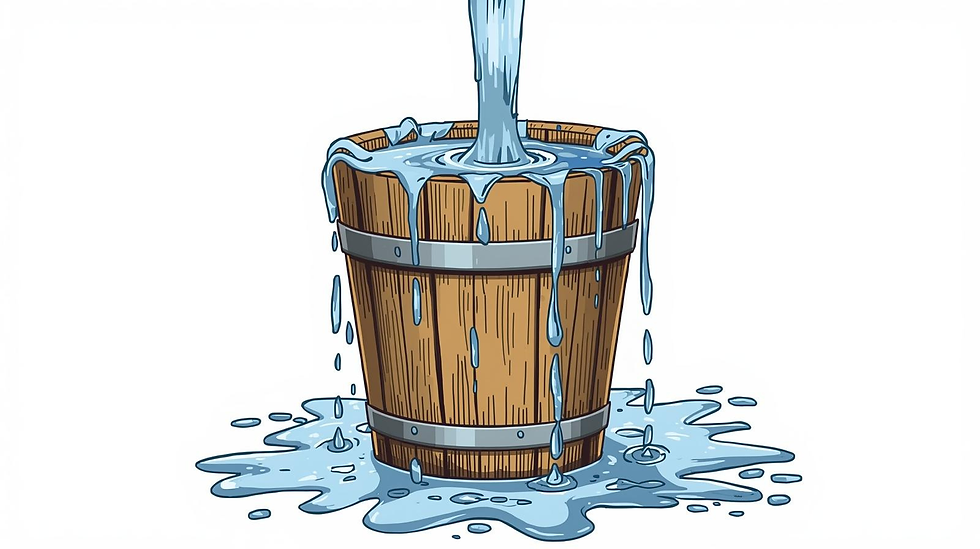
1. The Stress Bucket: The Science of Trigger Stacking
One of the most vital concepts we teach our clients is the "Stress Bucket." To understand your dog, you must stop looking at their behavior in isolation and start looking at their cumulative stress.
Think of your dog’s ability to handle the world like a physical bucket. Every stressful event—a loud truck rattling down Redwood Rd, a squirrel taunting them from the fence, or a neighbor’s dog barking—adds a "drop" of cortisol and adrenaline to that bucket.
The Coach’s Distinction: Eustress vs. Distress
In Lacrosse, there is a difference between the stress of a championship game and the stress of a toxic locker room. As a Guide, you must understand that your dog's bucket is filled by two types of "arousal":

Eustress (Good Stress): This is "positive arousal." It’s the adrenaline of a high-intensity game of "Find It," a successful Mantrailing run, or the excitement of a fast break. It builds resilience and focus.
Distress (Bad Stress): This is "negative arousal." It’s the anxiety of being overwhelmed, the fear of a construction site, or the frustration of being "trapped" on a 6-foot leash.
The Strategist's Warning: Here is what most owners miss: Both fill the bucket. Even "good" excitement (Eustress) uses up biological resources and increases the cumulative load. If your dog spends all day in high-arousal Eustress (constant fetch or unmanaged play), their bucket will still overflow, leading to the same "glitches" and reactivity as Distress.
Strategist’s Resource: For a professional breakdown of how both "good" and "bad" stress impact your dog's behavior, explore Understanding Canine Stress. This resource aligns with our focus on managing the "Total Load" of stress to prevent behavioral blow-ups.
The 72-Hour Rule
What many owners don't realize is that cortisol—the primary stress hormone—does not vanish the moment the trigger is gone. It can take 24 to 72 hours for their physiological systems to return to a true baseline. This is why we prioritize Neural Refractory Periods. Recovery time is the foundation of resilience.
2. The Energy Contract: Fulfilling the "Roster"
In my experience within the world of Utah Lacrosse, games aren't necessarily won by the team with the most energy; they are won by the team that directs that highly disciplined energy toward a specific mission. Any coach worth their salt will tell you that the hardest player to manage isn't the one with low talent—it's the elite athlete who doesn't know their job or is unwilling to take direction.
When a player has D1-level speed but no tactical lane to run, they "self-employ." They start abandoning their post to chase the ball, disrupting the entire defensive set. Your dog is no different. They are born with a "Biological Debt" based on their breed's specialized software.
Fulfilling the "Roster"
The Close Defense (Rottweilers): My 100lb girl Freya is no pushover; she was built to hold the crease and dictate physical space. These are your "long poles" who prioritize body-checking and controlling the zone over chasing the ball for 100 yards.
The Goalie (Bloodhounds): Like my own partners, Sophie and Maia, these specialists track the play from the pipe. They need to work their nose to feel fulfilled.
The Two-Way Middie (German Shepherds): Just like Brittany’s All-Star players, Django and Kaiser, designed to patrol and transition at high speeds.
The Long-Stick Middie (Sighthounds): The pure speed athletes designed to close the gap the moment the ball moves.
The Clearing Specialist (Retrievers): The ultimate ball-handlers, designed to find the prize and bring it back to the coach unscathed.
If you don't give these "athletes" a structured play to run, they will find their own work—like guarding the front window or "checking" your guests.
3. The Decompression Zone: The Biological Necessity of Rest
In our modern suburban lives, dogs are often in a state of constant hyper-vigilance. But biologically, dogs are wired for high-intensity bursts followed by deep, uninterrupted energy conservation.
When a dog is denied this rest, they suffer from "impulse control fatigue." Just like an 11-year-old athlete who hasn't had a nap, a sleep-deprived dog is cranky, reactive, and unable to focus. They require 12 to 16 hours of rest per day to remain emotionally stable.
The Science of Neural Consolidation
Sleep is the "save button" for learning. During deep rest, the canine brain processes the day's experiences and moves new skills from short-term to long-term memory. Without a designated "Safe Space" or Decompression Zone, the training we do simply won't "stick."
Here's a fun list of examples we like to use when trying to find an interactive way to give our dogs enrichment

The Road Ahead: From Management to Communication
Understanding the biology of your dog is the moment you stop fighting against their nature and start working with it. Phase 1 is about Management. It is about setting the stage so that training actually has a chance to work.
By draining the stress bucket and respecting the biological need for fulfillment, we create a dog that is calm, receptive, and ready for Phase 2: Communication.
Learn more about our 24/7 Trainer mindset here.
Check out our Categories


Comments